Managing welfare compliance in fit-out environments can be just as demanding as any new build and often more complicated. You’re working around existing structures, live occupants, and site boundaries that shift every few weeks.
The legislation doesn’t bend for fit-out environments.
Under the Construction (Design and Management) Regulations 2015, welfare facilities are a legal requirement on any construction project, refurbishment included. That your welfare provision for occupied building refurbishments (including toilets, washing facilities, rest areas, and drinking water) needs to be in place before work starts, not once the project is up and running.
When the building is occupied and there’s no obvious place to put a welfare block, temporary welfare solutions for phased construction are usually the most practical answer, and in most cases, the only one that actually works.
Why Refurbishment Sites Have Different Welfare Challenges
A newbuild site has a clear boundary, a fixed layout, and a blank canvas. You know where the welfare facilities are going on day one. Refurbishment and fit-out sites are rarely that straightforward. Most of the specific challenges come down to four things.
Occupied or Partially Occupied Buildings
Office refurbishments, school upgrades, NHS estate works, retail fit-outs, hotel renovations in live trading environments. You can’t just drop a welfare cabin wherever it suits you. You need to think about pedestrian routes, fire exits, building management agreements, and often a formal method statement before anything arrives on site.
Compact, self-contained welfare provisions for occupied building refurbishment work well here.
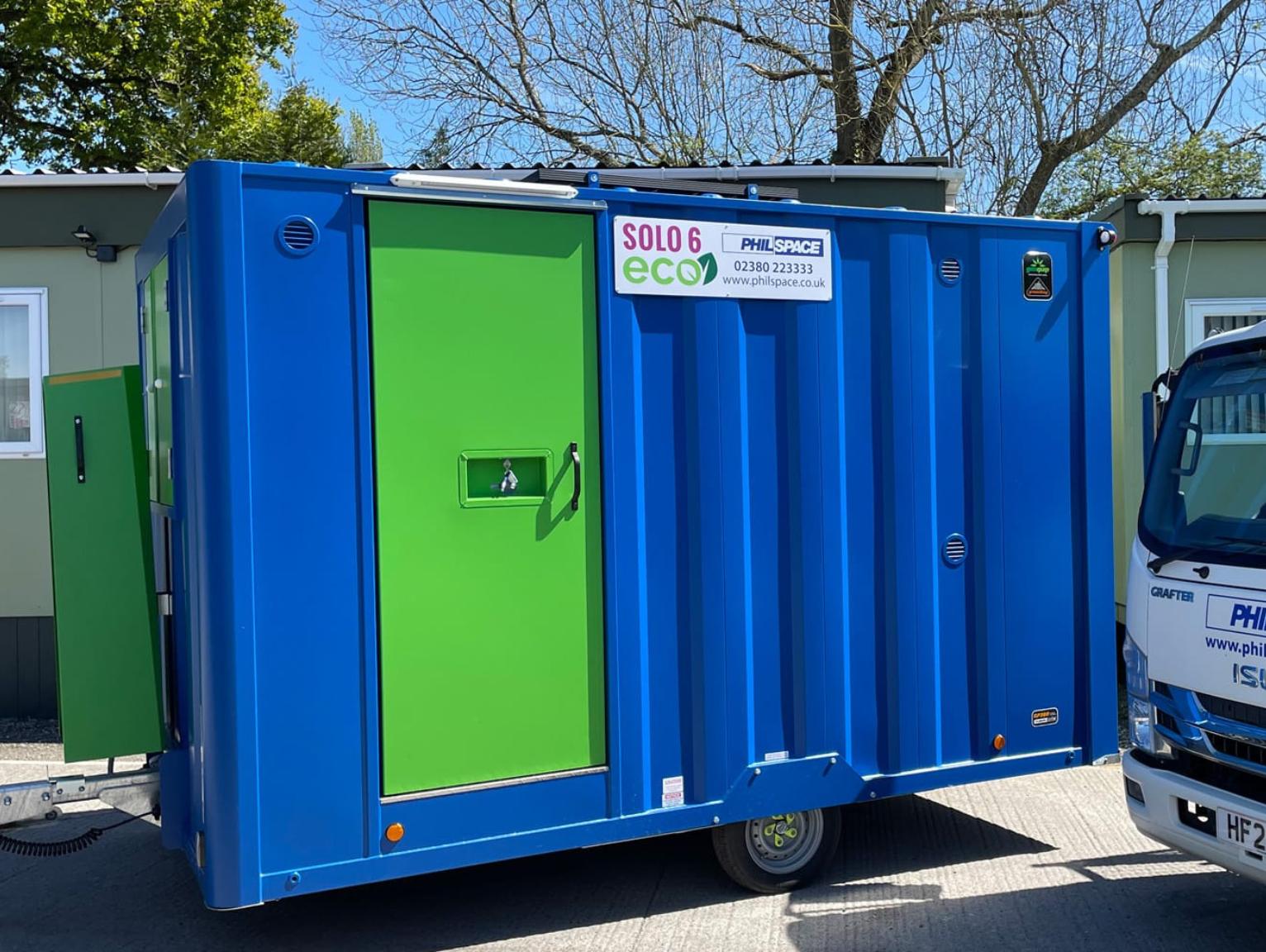
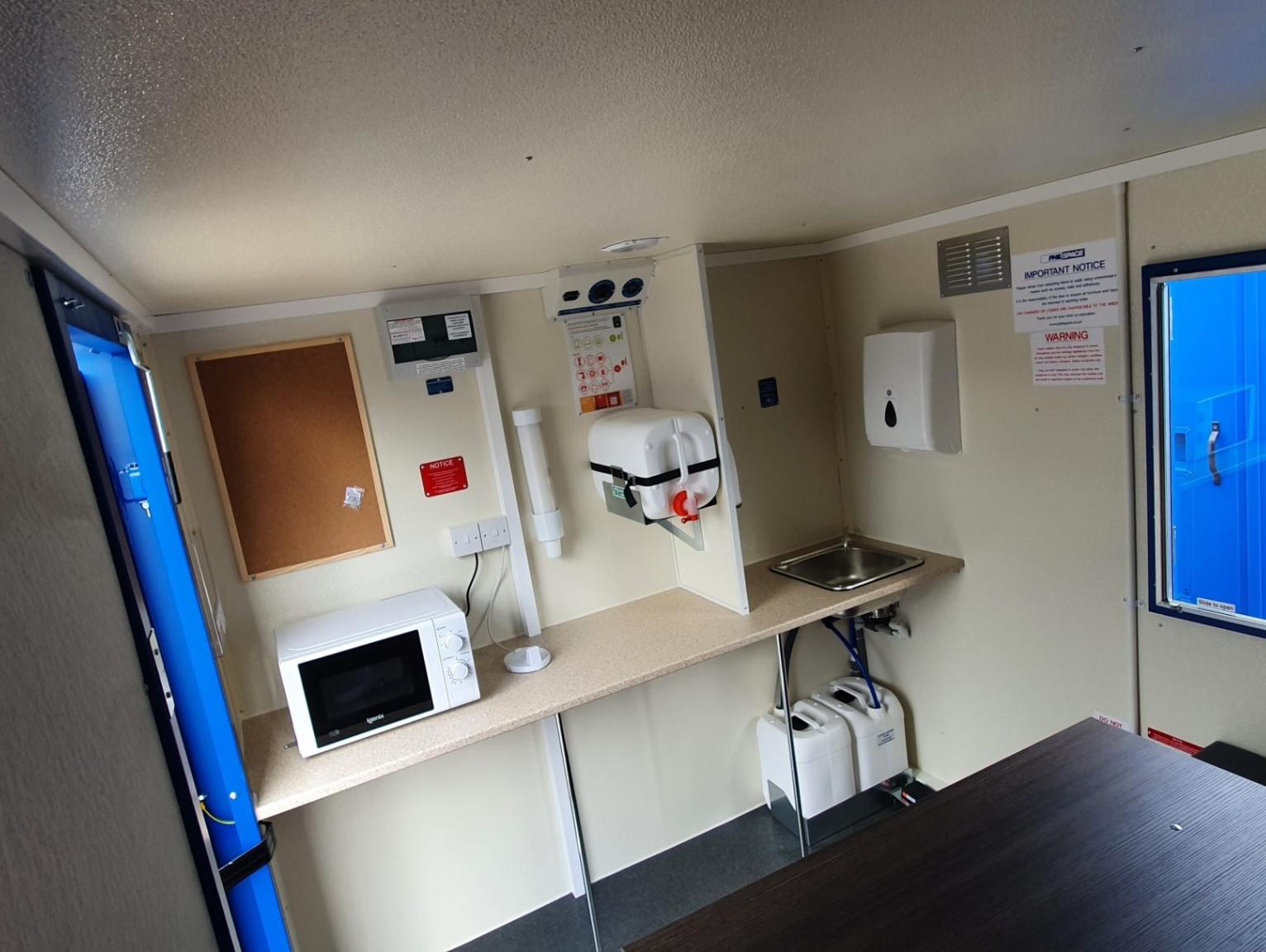
Our Solo 6 and Solo 16 welfare units are designed for exactly this kind of environment. They’re small enough to be positioned carefully and self-sufficient enough not to need connections to the building’s utilities, and they look a good deal smarter than a standard site cabin plonked outside a listed office block.
Phased Working
Fit-out work almost always happens in phases. That means your welfare provision needs to move with you. A unit positioned to serve phase one might be completely impractical by month four, when the workforce has shifted to the other end of the building.
Hiring temporary welfare solutions for phased construction on a flexible basis, with the ability to reposition as the project progresses, is the sensible approach. We deliver and collect on our own Hiab vehicles, so repositioning a unit on the same site is something we can turn around quickly.
Limited Access and Tight Footprints
City centre fit-outs, basement works, and narrow-access sites often can’t accommodate full-size welfare blocks. A standard six-metre anti-vandal canteen might simply not get into a goods yard or through an urban plot’s access point.
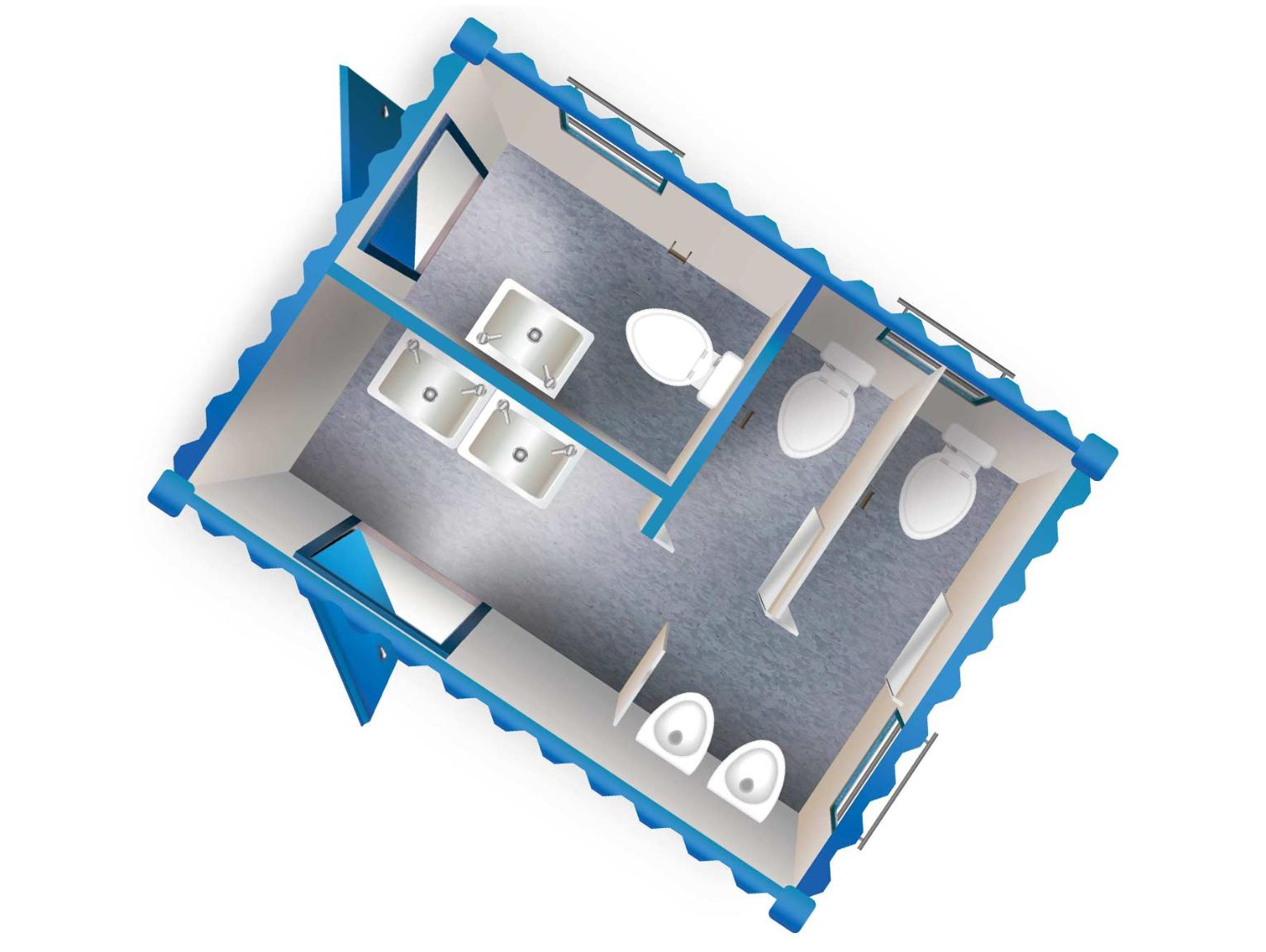
Our Combi welfare units combine toilet and rest facilities in a single compact unit, making them particularly useful where space is the primary constraint. Wheeled facilities can also offer more flexibility where ground conditions or access routes make positioning a rigid unit difficult.
Managing Welfare Compliance in Fit-Out Environments
The CDM Regulations 2015 set out the minimum welfare standards for construction sites. The HSE’s full guidance on welfare requirements covers the specifics in detail.
The short version: the number and type of facilities required scales with the size of the workforce and the nature of the work.
For refurbishment and fit-out projects, the key requirements are usually:
- Flush or chemical toilets, with hand washing facilities adjacent
- Hot and cold running water, soap, and means of drying hands
- A rest area with seating and facilities to heat food
- Changing and storage facilities for personal protective equipment
- Drinking water
On a short-duration fit-out, or on a site where utility connections are not available from day one, a self-contained welfare unit covers all of these without you having to rig up temporary supplies or negotiate building access for a plumber on the first morning.
Need Welfare Units for a Fit-Out Project?
Tell us what you’re working on and we’ll recommend the right welfare unit for the job. Call us on 023 8022 3333 or get in touch through our website.
Welfare Provision for Occupied Building Refurbishments
There’s a difference between technically complying with welfare legislation and actually providing decent conditions for your team. The two should be the same thing, but they’re not always treated that way.
Construction workers deserve proper rest facilities.
Good welfare provision reduces fatigue, reduces accidents, and increases productivity on site. That’s practical reality backed up by the HSE’s guidance on worker welfare in construction.
Your team needs a proper break area, somewhere to eat without breathing in gypsum dust, and clean facilities they can reach without walking through occupied floors.
The Chartered Institute of Building’s research on worker wellbeing consistently identifies poor welfare provision as one of the leading drivers of low morale and high labour turnover in the sector.
Temporary Welfare Solutions for Phased Construction
Phased delivery is probably the most underappreciated planning challenge on a fit-out project. Most contractors think about the end state and work backwards, but welfare needs to be in place from the very first day of work, even if phase one is just a small section of one floor.
The practical approach is to hire a self-contained unit from the outset, positioned to serve phase one, then plan for repositioning as subsequent phases start. On a multi-phase project running six to eighteen months, you might move the unit two or three times, but that’s better than cutting corners in phase one because welfare wasn’t thought through early enough.
Ready to Get Your Welfare Sorted?
We’ve been supplying temporary site accommodation to contractors, councils, and commercial clients across Hampshire and the South for more than fifty years. We know what fit-out sites look like, what the space constraints are, and how to get the right unit to the right place without drama.
If you’re planning a refurbishment project and need to get your welfare provision sorted, get in touch with the team. Call us on 023 8022 3333, email enquiries@philspace.co.uk, or use the contact form on our website.
FAQs
Do welfare facilities legally need to be on site from day one of a refurbishment project?
Yes. Under the Construction (Design and Management) Regulations 2015, welfare facilities must be in place before construction work begins, regardless of whether the project is a newbuild or a refurbishment. Temporary welfare unit hire is the most practical way to ensure compliance immediately, particularly where permanent facilities are not yet available or accessible.
Can refurbishment contractors use the existing building’s toilets and rest areas instead of bringing in welfare units?
Contractors can use a building’s existing facilities only if there is a documented agreement with the building owner, the facilities are genuinely accessible to the workforce throughout the working day, and conditions remain sanitary throughout the works.
What size welfare unit do I need for a fit-out team?
The size of the welfare unit required depends on the number of workers on site at peak. As a general guide: the Solo 6 is suitable for teams of up to around six workers, and the Solo 16 serves larger teams of up to sixteen. Both are self-contained, with toilet, handwashing, and rest facilities.