Highway contractors, utilities teams, and rail crews have a set of demands that most site accommodations were never really designed for. Mobile welfare units for highways and utility work are increasingly how those teams are meeting these demands.
With location changes every few days and the fixed notice of the window, the expectation is that welfare provision turns up ready to go, not half a day after the crew has already started.
Getting that right means you need a different approach to standard site welfare hire, and it starts with what mobile infrastructure work actually demands.
Why You Need Welfare Solutions for Highways and Utilities Teams
The HSE’s welfare requirements apply to short-duration infrastructure work just as they do to longer construction projects. Under the Construction (Design and Management) Regulations 2015, utilities, highways, and rail contractors are required to provide a number of facilities:
- Toilet facilities
- Washing facilities with hot and cold water
- A rest area
- A place for staff to change and dry clothing
These are non-negotiable, regardless of how long the job lasts or how many people are on the team.
This can easily catch out your team.
Short-duration work can feel informal, particularly when you’re moving between locations in the same week. But inspectors do visit short-term sites, and enforcement notices are issued. Welfare compliance for mobile infrastructure crews is a legal requirement from day one, and it needs to be treated that way.
There’s also a practical case to be made.
A crew running long shifts on an exposed carriageway or a remote utilities site without access to proper rest facilities or hot water is not going to be working to the best of their ability. Welfare provision is something that people notice and makes a huge difference to productivity and staff morale.
Self-Contained Units That Can Move With the Work
The obvious challenge with welfare solutions for highways and utilities teams is that mains connections aren’t always available, and even when they are, setting them up takes time you often don’t have. A work notice has a start date, and a lane closure has a booked slot, for example.
Self-contained welfare units solve this cleanly.
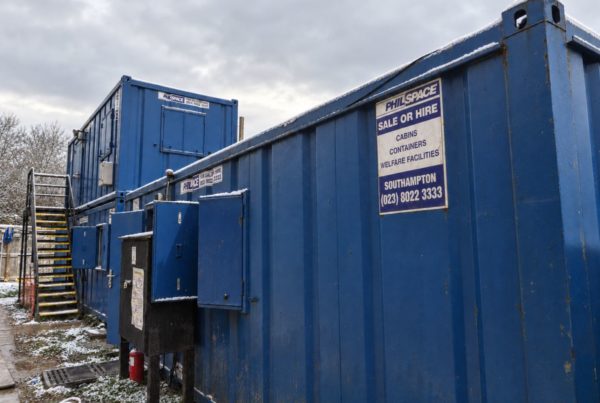
They carry their own water storage, generate their own power, and arrive on the site ready to use. Our Solo welfare range was built with mobile infrastructure crews in mind.
The Solo 6 and Solo 16 are lightweight and towable, meaning they can be repositioned between locations without specialist equipment. Each unit includes toilet facilities, hot water, a rest area, and drying space, covering all of the HSE welfare requirements from the moment it’s placed on site.
For teams working in areas where running a generator creates noise or emissions issues, we also offer eco variants fitted with solar panels. They do the same job with less fuss.
Want to Find the Right Welfare Solutions for Your Highway & Utilities Team?
If you’re not sure which unit is right for your job, then give us a call, and we can talk you through it. The Philspace team has decades of experience in matching your team with the right welfare solution. Call us on 02380 223333 or get in touch online.
The Right Size for Your Crew
Choosing the right unit also comes down to gang size and duration. The Solo 6 suits smaller gangs doing short-duration site work (two to six workers on a job that moves frequently). The Solo 16 is better for larger crews generally working on slightly longer stints while staying compact enough to fit within a traffic management footprint.
For bigger gangs or projects that run for several weeks across multiple locations, the Combi gives you more capacity without losing the self-contained advantage.
Welfare Units for Utilities and Rail Workers Across Multiple Sites
One of the more common logistical headaches for utilities and rail contractors is the multi-location problem. A single team working across three different sections in a week technically needs welfare provision at every location. That said, hiring a separate unit for each stop gets expensive, and coordinating multiple deliveries from different suppliers adds unnecessary complexity.
A mobile welfare unit removes these headaches
The cleaner approach is to just use a unit that can be moved between sites easily and effectively. Choosing a unit that can be delivered and handled by in-house Hiab-equipped vehicles means that, when you need a welfare unit relocated, it can be arranged directly.
This means there aren’t the usual delays that come from coordinating third parties. For teams running on tight schedules, that kind of reliability makes a massive different to how smoothly the week runs.
Seeking Support for Your Welfare Needs on Short-Duration Site Work?
At Philspace, we’ve supplied welfare units and site accommodation across the South for decades, and a big part of that work has been with highways contractors, utilities companies, and rail teams who are working fast and need provision that keeps pace.
When you call us, the unit arrives on time and ready to work, which is why our customers keep coming back, year on year.
If you’ve got a highways, utilities, or rail project coming up and you need welfare compliance sorted without the hassle, get in touch.
We’ll recommend the right unit for your crew and duration, handle the logistics, and make sure you’re covered from the first day onsite.
FAQs
What welfare facilities are required for highway and utilities work?
Under CDM 2015, all infrastructure work (including highways and utilities) requires toilets, hot and cold washing facilities, a rest area, and changing and drying space. These requirements apply to all durations and gang sizes, with no exemption for short-duration site work.
What is a self-contained welfare unit, and why does it suit mobile infrastructure crews?
A self-contained welfare unit operates without mains water or electricity. It carries its own water storage and power supply, making it ready to use the moment it arrives on site. This makes it the practical choice for utilities and highway crews moving between locations regularly.
How do mobile welfare units support short-duration site work?
Mobile welfare units are towable, self-sufficient, and quick to reposition between locations. They meet HSE welfare requirements from the moment they are placed on site, no connections needed, no setup delays. This makes them well suited to short-duration highways, utilities, and rail projects.